Healthy Living for a Better Future
Also reading
View allOmega-3s Explained: Fish, Seeds, and Brain Health
June 13, 2026
Cold Exposure: What Science Says About Ice Baths and Recovery
June 13, 2026
HRV Training: A Beginner's Guide to Heart Rate Variability
June 12, 2026
Intermittent Fasting: A Practical Guide to Metabolic Health
June 12, 2026
The RENEW Standard
We translate complex health science into clear, actionable insight — so you can make better decisions about your body and your future.
7 Daily Habits for a Longer Healthspan
Science-backed daily practices covering light, movement, nutrition, sleep, recovery, and focus. No extreme protocols — just clarity you can start tomorrow.
- PDF download — no signup required
- 7 habits you can start this week
- Built from RENEW editorial research
RENEW Guide
7 Daily Habits for a Longer Healthspan
A practical RENEW guide to habits that compound over years — not days.
The latest
Continue reading
Red Light Therapy: What the Evidence Actually Shows
Red and near-infrared light devices are everywhere — from skin clinics to home panels. We separate marketing hype from published research on skin, muscle recovery, and sleep.
June 11, 2026
The Mediterranean Diet: Why It Remains the Gold Standard for Longevity
Decades of research consistently rank the Mediterranean diet among the best eating patterns for heart health, brain function, and lifespan. Here is what makes it work.
June 11, 2026
Memory and Sleep: How Your Brain Consolidates Learning
Sleep is not passive downtime — it is when your brain transfers short-term experiences into long-term memory. Here is how slow-wave and REM sleep support learning and creativity.
June 10, 2026
Zone 2 Cardio: The Underrated Foundation of Longevity
High-intensity workouts get attention, but low-intensity steady-state cardio may be the most important training zone for metabolic health and extending healthspan.
June 10, 2026
Cortisol and Stress: Understanding Your Body's Alarm System
Cortisol is not the enemy — it keeps you alive in acute stress. Chronic elevation is the problem. Learn how the HPA axis works and evidence-based ways to regulate it.
June 9, 2026
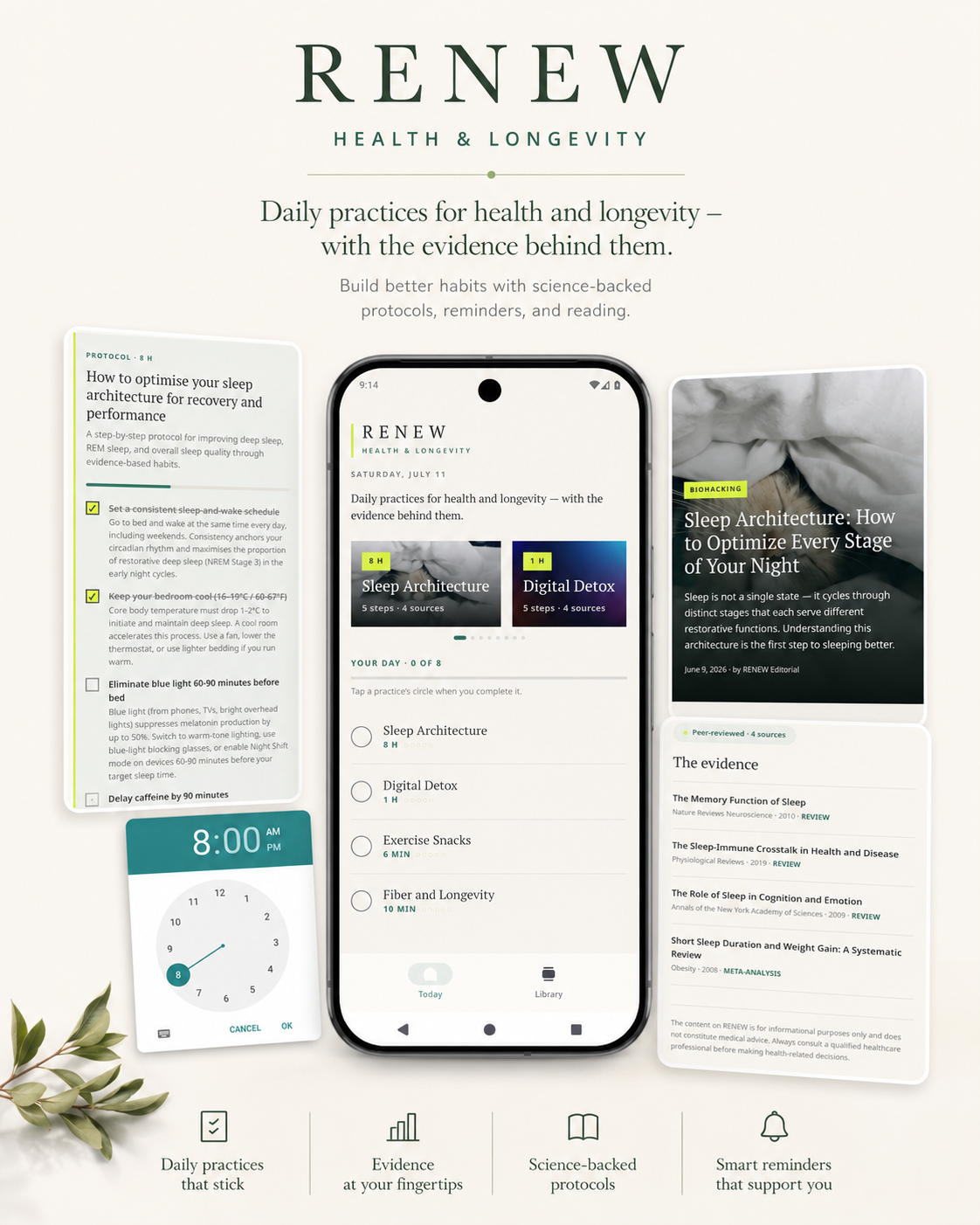
Sleep Architecture: How to Optimize Every Stage of Your Night
Sleep is not a single state — it cycles through distinct stages that each serve different restorative functions. Understanding this architecture is the first step to sleeping better.
June 9, 2026
Breathwork Basics: Box Breathing and Beyond
Controlled breathing is one of the fastest ways to shift your nervous system. From box breathing to physiological sighs, here are techniques backed by physiology — not just wellness trends.
June 8, 2026
The Gut-Brain Axis: How Your Microbiome Shapes Mood and Cognition
Your gut and brain are in constant communication through nerves, hormones, and immune signals. Emerging research reveals just how much intestinal health influences mental performance.
June 8, 2026
Digital Detox: Reclaiming Attention in a Noisy World
Constant notifications fragment focus and elevate background stress. A practical digital detox is not about quitting technology — it is about designing boundaries that protect your attention.
June 7, 2026
Morning Sunlight: The Simplest Habit for Better Energy and Sleep
Ten minutes of morning light may do more for your energy, mood, and sleep than any supplement. Here is the science behind circadian light exposure.
June 7, 2026
Minimalist Morning Routines That Actually Stick
The best morning routine is one you will repeat. Strip away the 12-step influencer checklist and build a short sequence anchored to light, movement, and intention.
June 6, 2026
Magnesium: The Mineral Most People Overlook for Sleep and Stress
Magnesium plays a role in over 300 enzymatic reactions, yet surveys suggest nearly half of adults do not get enough. Here is how it supports relaxation and recovery.
June 6, 2026
Telomeres and Aging: What You Can (and Can't) Control
Telomere length is often marketed as a biological clock you can hack. The science is more nuanced — here is what telomeres do, what lifestyle factors influence them, and what remains out of your hands.
June 5, 2026
NAD+ and Cellular Energy: What Longevity Science Is Exploring
NAD+ is a coenzyme central to energy metabolism and DNA repair. As levels decline with age, researchers are investigating whether restoring it can slow aspects of the aging process.
June 5, 2026
Mindful Movement: Why Gentle Exercise Beats Intensity for Stress Relief
When stress is high, the answer is not always harder workouts. Slow, intentional movement can lower cortisol and restore nervous system balance more effectively.
June 4, 2026
Rewiring Morality: Should We Erase Guilt for Good?
Neuroscience is revealing how guilt is encoded in the brain — and whether we could, or should, modify it. A look at the ethics and science of rewiring our moral emotions.
May 20, 2026
Rewriting the Future: The Secrets to a Long, Vibrant Life
People who live well beyond 100 often defy common expectations about aging. In regions known as “Blue Zones,” where people routinely live longer than average, researchers have found that genetics play only a small role. Instead, lifestyle, environment, and social habits have a profound impact on longevity. Centenarians in these regions not only live longer, but they also remain active, mentally sharp, and free from many of the chronic diseases that affect aging populations elsewhere. In Okinawa, Japan, elderly residents practice Hara Hachi Bu, a cultural habit of eating until they are about 80% full. This practice naturally reduces caloric intake without extreme dieting, which has been shown to activate autophagy, a cellular process that removes damaged cells and promotes repair. Many in Okinawa also consume high amounts of antioxidant-rich foods, particularly sweet potatoes, seaweed, and tofu, all of which reduce inflammation and oxidative stress—two key drivers of aging. Meanwhile, in Sardinia, Italy, men in their 90s and even 100s still tend their fields and walk miles daily on mountainous terrain, reinforcing the idea that movement should be a natural part of daily life rather than a structured, forced activity. In Nicoya, Costa Rica, the combination of a diet rich in fiber and complex carbohydrates, strong community ties, and a clear sense of purpose all contribute to longer, healthier lives.
March 12, 2025
The Power of “Slow Thinking”: Why Taking Your Time Is the Key to Better Decisions
In a world that prioritizes speed and efficiency, the idea of “slow thinking” may seem counterproductive. But recent research in psychology is showing that taking the time to reflect and think deeply can actually lead to better decisions, less stress, and more innovative solutions. What if slowing down could help you live a more successful, fulfilling life in the long run? The Science Behind Slow Thinking: In his groundbreaking book Thinking, Fast and Slow, psychologist Daniel Kahneman introduces the concept of two systems of thinking that influence our decision-making: System 1, which is fast, automatic, and operates on intuition, and System 2, which is slower, more deliberate, and analytical. While System 1 is effective for making quick decisions and handling routine tasks, it's System 2 that allows us to engage in deeper analysis, weigh complex options, and make thoughtful, informed decisions. The problem today is that we often over-rely on System 1 because of the pace of modern life, even when a more deliberate, reflective approach (System 2) might lead to better results. Research from the Journal of Experimental Psychology shows that allowing ourselves time to engage in slow thinking leads to more accurate problem-solving and decision-making. It allows us to process information at a deeper level and consider multiple perspectives, something that fast thinking often misses. Moreover, slow thinking can help us manage complex situations more effectively, leading to better long-term outcomes. The Benefits of Slow Thinking: Contrary to what we might assume, slow thinking isn’t about overthinking or procrastination. It's about giving ourselves the space to reflect on different options, consider the long-term consequences, and be mindful of the bigger picture. According to studies published in Harvard Business Review, individuals who regularly practice slow thinking tend to have sharper judgment and better decision-making abilities, especially when faced with high-pressure situations. These individuals are also more creative, resilient in the face of challenges, and have a better ability to handle stress.
March 5, 2025
The Silent Conversation Between You and Your Food
The food you eat does more than fill your stomach—it acts as a set of instructions that direct your body’s energy levels, cognitive function, emotional balance, and long-term health. Every meal sends biochemical signals that influence everything from brain activity to gut health and immune response. The question is, are you giving your body the right instructions? Your body does not simply count calories; it deciphers nutrients, translating them into biological actions. Omega-3 fatty acids, found in walnuts, flaxseeds, and salmon, are essential for brain function. Research published in The American Journal of Clinical Nutrition found that regular consumption of omega-3s is associated with improved memory and a reduced risk of cognitive decline. Antioxidants from colorful fruits and vegetables protect against oxidative stress, which accelerates aging and weakens cells. A study from Harvard T.H. Chan School of Public Health concluded that a diet rich in antioxidants from berries can help slow down age-related cognitive decline by improving communication between brain cells. Ultra-processed foods filled with artificial additives and refined sugars disrupt the body's natural rhythm. Studies published in JAMA Neurology suggest that excessive consumption of processed foods is linked to increased inflammation in the brain, contributing to mood disorders and cognitive impairments.
February 27, 2025
The Power of Curiosity How Questions Shape Your Mind
Curiosity is one of the most powerful forces driving human learning, problem-solving, and innovation. Neuroscience has revealed that curiosity is not just a personality trait but a fundamental cognitive process deeply embedded in the brain’s structure and function. It influences how we seek information, how we process new experiences, and how we retain knowledge over time. Curiosity activates the brain’s reward system, particularly the dopaminergic pathways that regulate motivation and reinforcement. When faced with something novel or uncertain, the brain detects a knowledge gap—a discrepancy between what we know and what we want to know. This detection occurs in the ventral tegmental area, a key region involved in dopamine release. The brain responds by flooding itself with dopamine, increasing motivation and making the process of learning feel intrinsically rewarding. This dopamine-driven feedback loop is what makes curiosity self-sustaining. When a person asks a question, searches for an answer, and finally gains new knowledge, the brain reinforces the behavior by making the experience pleasurable. The result is a cycle of continuous learning, where curiosity leads to more curiosity.
February 24, 2025
The Science of Doing Nothing and Why It Matters for Well-Being
doing nothing is often misunderstood as laziness or wasted time but research shows that idleness is essential for mental well-being creativity and cognitive function in a world that constantly demands productivity slowing down is not just beneficial but necessary the brain does not stop working when we are idle instead it shifts into a different state known as the default mode network dmn which is responsible for processing emotions consolidating memories and generating new ideas when we allow our minds to wander without immediate focus we strengthen neural connections and gain clarity on problems that may have seemed unsolvable before the glorification of busyness in modern society has led to an epidemic of stress and burnout constantly filling every available moment with work social media and endless to-do lists prevents the brain from getting the rest it needs chronic stress increases levels of cortisol a hormone linked to anxiety depression and physical health issues such as high blood pressure and heart disease research from harvard medical school suggests that regularly practicing relaxation techniques such as meditation slow walks and unstructured time can lower cortisol levels improve emotional resilience and enhance overall health
February 23, 2025
Finding Calm How Nature Boosts Your Mental Wellness
Spending time in nature isn’t just a pleasant break—it’s a profound, often underappreciated way to recharge your mind and bolster your overall wellness. In a world dominated by glowing screens, relentless deadlines, and a barrage of notifications, stepping outside into green spaces offers a reset button for your mental health that’s hard to replicate indoors. Research consistently highlights how even a brief walk in a park, a quiet pause beneath a sprawling oak, or the sound of rustling leaves can lower stress levels, sharpen your focus, and elevate your mood. This isn’t some whimsical notion—it’s rooted in our biology, a remnant of how humans evolved alongside the natural world. One of nature’s standout gifts is its ability to dissolve stress almost instantly. Imagine standing amid towering pines, hearing the chatter of birds overhead, or watching sunlight ripple across a pond. In those moments, your body naturally reduces cortisol, the stress hormone that keeps you tense and wired. A Japanese study on “forest bathing”—simply soaking in a wooded environment—found that just 20 minutes can slash cortisol levels, leaving you feeling lighter, as if the pressures of work, bills, or arguments have drifted away on the breeze. Scientists attribute this to “biophilia,” our innate affinity for the living world, a connection forged over millennia of living off the land. It doesn’t matter if you’re in a vast national forest or a modest urban garden—nature provides a sanctuary, a space where your nervous system can unclench and breathe. Even the scent of grass or damp earth can trigger this calming shift, grounding you in the present.
February 20, 2025
Mitochondria and Longevity: The Cellular Key to a Longer Life
When it comes to living a long, healthy life, we often hear about eating right, staying active, or getting enough sleep. But there’s something happening deep inside our cells that might matter just as much: the health of our mitochondria. These tiny structures, often nicknamed the "powerhouses" of the cell, are responsible for producing ATP—the energy that powers everything from our heartbeat to our thoughts. Beyond that, they play a starring role in how we age. If we can keep our mitochondria running smoothly, we might unlock a secret to not just living longer, but living better. So, what exactly do mitochondria do? Picture them as little factories inside every cell, turning nutrients from food into usable energy. It’s an amazing process, but it’s not perfect. As they work, mitochondria also produce free radicals—unstable molecules that can cause trouble. Over time, these free radicals damage the mitochondria themselves, especially their DNA, which doesn’t have the same repair tools as the DNA in the rest of the cell. As the years go by, this damage builds up, and the mitochondria start to struggle. Scientists call this "mitochondrial dysfunction," and it’s linked to the tiredness we feel as we age, as well as bigger problems like heart disease, diabetes, and even Alzheimer’s.
February 20, 2025
Unlocking the Power of Cold Exposure: How Ice Baths and Cold Showers Enhance Health
Cold exposure is a well-known biohacking technique that leverages the body's natural response to cold stress to enhance physical and mental performance. This practice, which includes methods like cold showers, ice baths, and cryotherapy, has been used for centuries in various cultures to improve health and resilience. By regularly exposing the body to cold temperatures, biohackers aim to optimize metabolism, strengthen the immune system, reduce inflammation, and improve mental clarity. One of the primary benefits of cold exposure is its ability to activate brown adipose tissue, commonly known as brown fat. Unlike white fat, which stores energy, brown fat burns calories to generate heat. This thermogenic effect not only helps regulate body temperature but also boosts metabolism, making cold exposure an effective tool for weight management. Studies have shown that individuals who regularly expose themselves to cold temperatures tend to have higher levels of brown fat, which contributes to better energy expenditure and fat oxidation.
February 19, 2025
The Basics of Biohacking How to Optimize Your Body and Mind
Biohacking is the practice of using science, technology, and lifestyle changes to optimize physical and mental performance. It involves small, intentional changes to improve health, longevity, and overall well-being. Many biohackers experiment with diet, supplements, exercise, and even wearable technology to track and enhance their body's functions. One of the most common forms of biohacking is nutritional optimization. Many biohackers follow specific diets such as intermittent fasting, keto, or paleo to improve metabolism and cognitive function. Fasting, for example, is known to promote cellular repair and enhance mental clarity by reducing inflammation and regulating blood sugar levels.
February 19, 2025
How to Extend Your Lifespan Through Science-Backed Longevity Strategies
Longevity is not just about living longer but also about maintaining a high quality of life as you age. Scientists and health experts have identified several key factors that contribute to longevity, from diet and exercise to stress management and sleep optimization. One of the most significant contributors to longevity is diet. Research suggests that calorie restriction and intermittent fasting can enhance cellular repair and reduce inflammation, two critical factors in slowing down the aging process. Diets rich in antioxidants, healthy fats, and lean proteins—such as the Mediterranean or Blue Zone-inspired diets—have been linked to a lower risk of chronic diseases and longer lifespans.
February 19, 2025
The Role of Dopamine in Motivation and Productivity
Dopamine is a neurotransmitter that plays a crucial role in motivation, reward, and overall cognitive function. Often referred to as the "feel-good" chemical, dopamine influences our ability to focus, take action, and experience pleasure from achievements. Understanding how dopamine works and how to optimize its levels can significantly impact productivity, mental clarity, and emotional well-being. One of the key functions of dopamine is the regulation of the brain’s reward system. When we complete a task, achieve a goal, or experience something pleasurable, dopamine is released, reinforcing the behavior and encouraging us to repeat it. This mechanism is essential for habit formation and long-term motivation. However, modern distractions, such as social media and instant gratification, can hijack this system, leading to lower motivation for meaningful tasks.
February 19, 2025
How Low-Intensity Exercise Can Improve Your Mental Health
Low-intensity exercise plays a significant role in promoting mental well-being. Unlike high-intensity workouts that push the body to its limits, low-intensity activities focus on steady, gentle movement that enhances both physical and psychological health. Engaging in exercises such as walking, yoga, pilates, or swimming can reduce stress levels, improve mood, and enhance cognitive function without placing excessive strain on the body. One of the primary benefits of low-intensity exercise is its ability to reduce stress and anxiety. Physical movement encourages the release of endorphins, the body’s natural mood boosters. These neurotransmitters help to alleviate feelings of tension and promote a sense of relaxation. Activities like yoga and tai chi incorporate mindful breathing techniques that further contribute to stress reduction by calming the nervous system and fostering a sense of inner peace.
February 19, 2025
The Health Benefits of Quitting Alcohol
Quitting alcohol can have a profound impact on overall health and well-being. The effects are both immediate and long-term, leading to a healthier body, a clearer mind, and an improved quality of life. Many people underestimate the toll alcohol takes on their physical and mental health, but eliminating it from daily life can bring noticeable benefits. One of the first changes the body experiences is improved hydration. Alcohol is a diuretic, meaning it increases urine production and leads to dehydration. This dehydration affects the skin, organs, and even cognitive function. When alcohol is removed from the diet, the body retains more water, leading to healthier skin, better digestion, and improved energy levels.
February 19, 2025
Essential Habits for Staying Healthy During the Cold Season
Winter can be a challenging time for both our bodies and minds. With shorter days, colder temperatures, and fewer opportunities to be outdoors, it is easy to fall into less-than-ideal habits. However, by adopting a few key healthy habits, you can not only survive the winter but thrive throughout the season. One of the best ways to support your health during winter is to adjust your diet to include seasonal, nutrient-dense foods. Focus on root vegetables and dark leafy greens such as carrots, sweet potatoes, kale, and Brussels sprouts, which are not only delicious but also packed with vitamins and minerals to boost your immune system. Incorporate citrus fruits like oranges, grapefruits, and tangerines, which are rich in vitamin C and help support immune function while warding off seasonal colds.
February 12, 2025
Winter Nutrition Nourish Your Body for the Cold Season
Winter is a time for cozy meals, warm beverages, and hearty flavors. But beyond comfort, proper nutrition in the colder months is essential to support your immune system, maintain energy, and keep your body in balance. In this post, we’ll explore key strategies and foods that can help you thrive during winter. Embrace Seasonal Produce Winter is a time for cozy meals, warm beverages, and hearty flavors. But beyond comfort, proper nutrition in the colder months is essential to support your immune system, maintain energy, and keep your body in balance. In this post, we’ll explore key strategies and foods that can help you thrive during winter. Embrace Seasonal Produce Winter brings its own bounty of vegetables and fruits that are rich in nutrients. Think of robust root vegetables like carrots, parsnips, and sweet potatoes, as well as dark leafy greens such as kale and Brussels sprouts. Citrus fruits like oranges, grapefruits, and tangerines are packed with vitamin C to help boost immunity. By focusing on seasonal produce, you not only enjoy fresher, more flavorful ingredients but also support local agriculture.
February 10, 2025
By topic
Explore the library
Nutrition
Fiber and Longevity: Why Your Gut Loves Plants
Dietary fiber is one of the most underappreciated nutrients for healthspan. Here is how soluble and insoluble fiber support your microbiome, blood sugar, and cardiovascular health.
ReadBiohacking
Cold Exposure: What Science Says About Ice Baths and Recovery
From elite athletes to longevity researchers, cold exposure has moved from fringe experiment to mainstream recovery tool. Here is what the evidence actually shows — and how to start safely.
ReadNeuroscience
Memory and Sleep: How Your Brain Consolidates Learning
Sleep is not passive downtime — it is when your brain transfers short-term experiences into long-term memory. Here is how slow-wave and REM sleep support learning and creativity.
ReadWellness
Breathwork Basics: Box Breathing and Beyond
Controlled breathing is one of the fastest ways to shift your nervous system. From box breathing to physiological sighs, here are techniques backed by physiology — not just wellness trends.
ReadLifestyle
Morning Sunlight: The Simplest Habit for Better Energy and Sleep
Ten minutes of morning light may do more for your energy, mood, and sleep than any supplement. Here is the science behind circadian light exposure.
ReadLongevity
Zone 2 Cardio: The Underrated Foundation of Longevity
High-intensity workouts get attention, but low-intensity steady-state cardio may be the most important training zone for metabolic health and extending healthspan.
ReadNewsletter
The weekly health brief.
One concise email on nutrition, biohacking, neuroscience, and longevity. Built for readers who want signal over noise.
No spam. Unsubscribe anytime.