Heart rate variability is one of the most accessible biofeedback metrics for recovery and stress. Here is what HRV means, how to measure it, and how to use the data without obsessing over daily scores.
Heart rate variability (HRV) measures the variation in time between consecutive heartbeats. Counterintuitively, more variability often indicates a more adaptable nervous system — your body can shift between sympathetic (fight-or-flight) and parasympathetic (rest-and-digest) states with flexibility.
Low HRV relative to your own baseline may signal accumulated stress, poor sleep, illness, overtraining, or dehydration. High HRV is not a guarantee of fitness, but trending upward over weeks often correlates with better recovery habits.
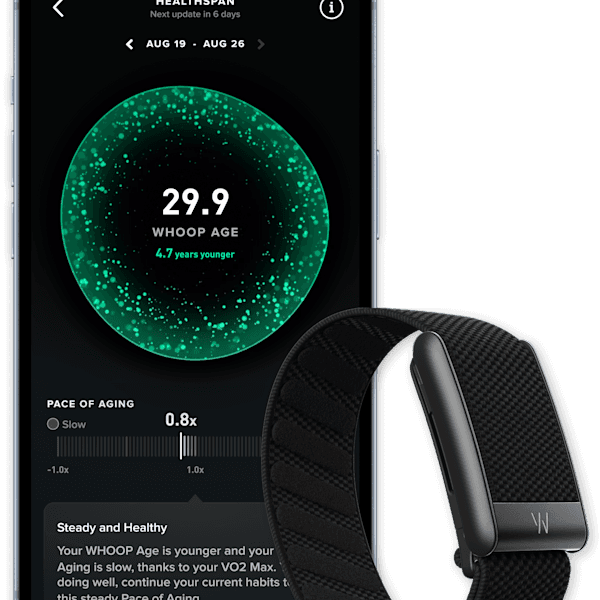
Consumer wearables (Oura, Whoop, Apple Watch, Garmin) estimate HRV using optical sensors, usually during sleep or upon waking. Consistency of measurement matters more than the absolute number — compare today against your rolling average, not against other people.
Mechanistically, HRV reflects how strongly the vagus nerve modulates the heart's own pacemaker, the sinoatrial node. The most common metric behind wearable HRV scores is RMSSD (root mean square of successive differences between heartbeats), which is sensitive to fast, breath-linked, parasympathetic fluctuations — the same vagal activity that slow breathing and good sleep tend to strengthen. This is also why HRV and resting heart rate often move in opposite directions: as vagal tone improves, resting heart rate tends to fall and HRV tends to rise.
A number of factors move HRV that have nothing to do with your training or stress management, and it helps to recognize them so you do not over-interpret a single reading. Alcohol has an outsized suppressive effect on overnight HRV, often larger than a hard workout. Illness, altitude, a late meal, and even the time of night the measurement is taken all add noise. Different brands also use different sensors and algorithms, so a Whoop HRV reading and an Oura HRV reading are not on the same scale — comparing your number to a friend's, or to a different device you used last year, is comparing two different measuring sticks.

What improves HRV over time? Adequate sleep, regular aerobic exercise, breathwork, reduced alcohol, and stress management. A single bad night or hard workout can suppress HRV for 24–48 hours — that is normal, not a crisis.
Use HRV as a recovery signal, not a daily grade. If your score is low, consider lighter training, earlier bedtime, or a rest day. If it is consistently low for weeks, examine lifestyle load holistically rather than chasing supplements.
HRV biohacking works best when paired with fundamentals: sleep, movement, nutrition, and social connection. The metric makes invisible stress visible — how you respond to that information is what matters.
A workable heuristic for daily decisions: compare this morning's reading to your trailing 7-day average rather than to yesterday alone, since single-day HRV bounces around for reasons that have nothing to do with recovery. A reading within your normal range is a green light for planned training; a dip of roughly 10–20% below your rolling average is an amber signal to consider an easier session; a larger or multi-day dip alongside a rising resting heart rate is a reasonable amber-to-red signal to prioritize sleep and back off intensity.
It is also worth naming a real downside of tracking: for a subset of users, daily HRV checking becomes its own source of stress — checking the score before checking in with how the body actually feels, or feeling deflated by a low number on an otherwise fine day. If a metric designed to reduce stress starts adding it, the more useful move is to check in weekly instead of daily, or to set the app aside for a stretch and rely on subjective signals like sleep quality, mood, and training performance.